
How Much Should You Budget for Monthly Office Snacks?

If you’ve ever Googled “office snack budget,” you’ve probably found a vague answer like “it depends” followed by a range so wide it’s useless. This post is different. After years of building refreshment programs for companies of all sizes — from scrappy Series A startups to scaling tech companies adding headcount every week — I’m giving you the real numbers, the real mistakes, and the real framework to get this right.
The Number You’re Looking For: $6–$8 Per Person, Per Day
Let’s start with the benchmark. A well-run office refreshment program costs $6 to $8 per person, per day. Here’s what that looks like at different company sizes:
These aren’t guesses. These are numbers built from real programs, real vendor relationships, and real product price points. Use them as your starting baseline — then adjust based on the variables we’ll cover below.
The Mistake That’s Costing You More Than Snacks
Here’s what I see constantly, and it’s far more expensive than the snacks themselves.
A company decides to DIY their snack program. Someone places a Costco order. Someone else sets up an Instacart account. Slowly, the task of ordering, tracking inventory, and restocking throughout the day falls to an office employee — often someone hired to do something completely different.
Now you have:
- No visibility into what people actually like
- Multiple vendors and invoices with no unified oversight
- Hidden consumption costs (employees filling backpacks before they go home)
- A hidden labor cost — a skilled employee spending real working hours managing granola bars
This is the snack program trap. The snacks themselves are a line item. The management of those snacks is where the real cost hides.
A Real-World Example: The AI Robotics Company
One of our clients was a Series D robotics and AI company growing fast — hiring multiple people every week. Their Head of HR had somehow inherited the snack program. What started as a manageable task became a genuine operational burden as headcount scaled.
When they came to us, we didn’t just drop off boxes. We:
- Built a planogram — a professionally designed product layout matched to their space and budget
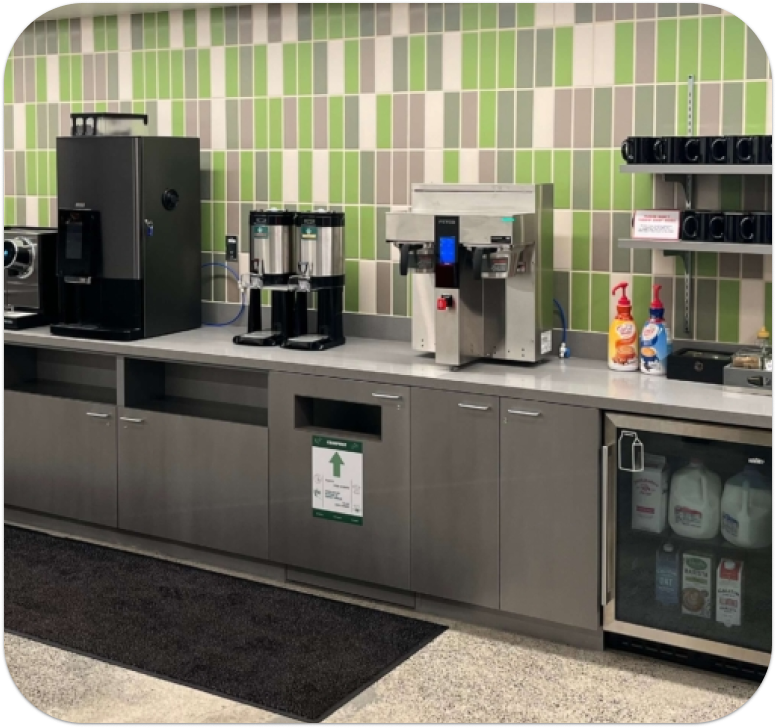
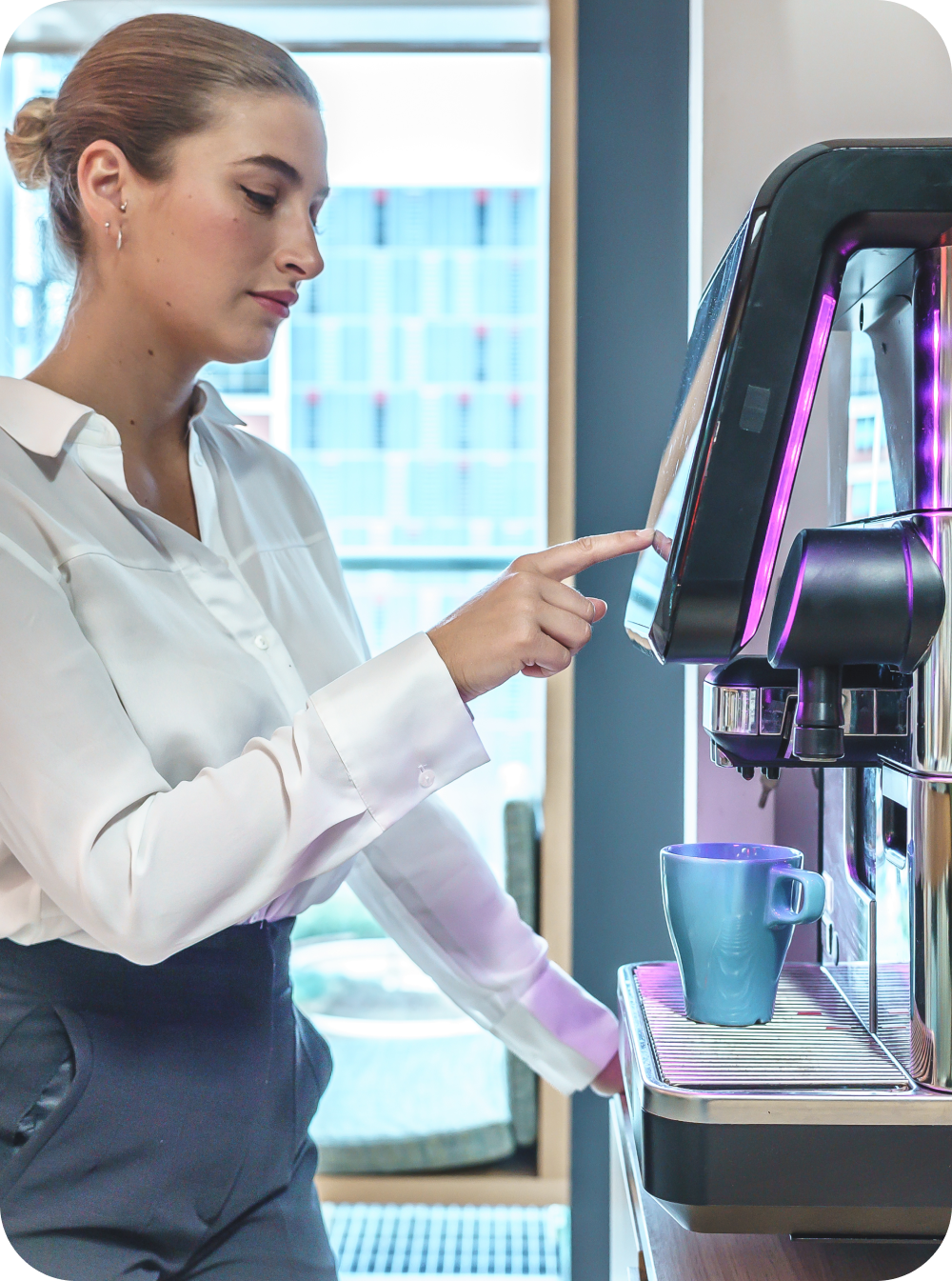
- Installed state-of-the-art coffee equipment, Bevi machines, and glass merch fridges
- Deployed onsite management software to track consumption and product performance
- Assigned a dedicated account manager to review analytics, rotate slow-moving products, and maintain budget
- Sent our own porters to handle all restocking — not outsourced staff, our team
The HR Director got her time back. The program ran itself. And employees had a refreshment experience that actually felt intentional.
That’s what a real program looks like.
Startup vs. Corporate: Different Budgets, Different Expectations
Not every company approaches this the same way, and they shouldn’t.
Early stage startups tend to be budget-conscious and lean. The priority is stretching dollars while keeping culture alive. The bigger challenge? Headcount changes fast. A snack program built for 30 people can feel sparse at 50. Keeping your vendor updated on growth and having a program designed to scale is critical. Our team can help track consumption aligned with growth to inform you about when you may want to increase the budget.
Established corporate teams typically have committed, pre-approved budgets with less pressure to justify every dollar. The expectation is consistency and overall value. They want it to just work.
One question we always ask any new client: Do you want us to fully stock and always have product available, or stock to your weekly budget and run out by Friday? The answer shapes everything — from order frequency to how many porter days you need each week.
The ROI Conversation: When Someone Wants to Cut the Snack Budget
At some point, every Workplace Experience Director faces a budget review where someone asks: “Do we really need to spend this much on snacks?”
Here’s how I think about it.
When you provide food and drinks for your team, you’re communicating something: we take care of you when you’re here. Employees connect over food. They stay in the office instead of running out for lunch. They feel seen in a low-cost, daily, tangible way.
Compared to the cost of a single health benefit, a team offsite, or a retention bonus — a snack program is remarkably affordable per person. And culturally, sharing food is one of the oldest signals of community and appreciation that exists.
Cutting the snack budget is rarely a neutral decision. It sends a message.

What People Actually Want (And What Nobody Touches)
Here’s what moves in office fridges and pantries based on real data:
High performers:
- Energy drinks
- Cold brew coffee
- Less packaging for beverages like still, sparkling, and flavored water on-tap such as Bevi
- Protein-forward, calorie-dense options like hard-boiled eggs, jerky, good quality bars
Graveyard items:
- Generic variety packs
- “Gas station” brands that look like they belong at a checkout counter, not a professional office
- High sugar, empty calorie snacks
If your pantry is full of products that nobody recognizes and nobody asked for — that’s inventory waste, not a snack program.
What Your Vendor Should Never Tell You (But I Will)
Managing a refreshment program is genuinely hard. It involves supplier relationships, product sourcing, equipment installation, inventory management, invoicing, and ongoing analytics. It is not a “set it and forget it” operation.
Your job as a Workplace Experience Director is not to survey your entire office about snack preferences, coordinate with three vendors, and track what’s running low on Thursday afternoon.
That’s not your expertise. And more importantly, it’s not the best use of your time.
A good vendor takes all of that off your plate — not just the delivery, but the thinking, the planning, and the ongoing management.
How to Evaluate a Refreshment Vendor
Not all vendors are equal. Here’s what I’d look for:
- Track record and longevity — have they done this long enough to have real client stories?
- Dedicated, non-outsourced staff — porters and account managers who are actually employed by the company
- Onsite presence — they should come to your office, understand your space, and build a program for you specifically
- Client testimonials — not marketing copy, real references
- Service leadership — someone accountable when things go wrong
On the topic of the big national players — Aramark, Canteen, Sodexo — they can sometimes compete on price. What they can’t offer is white-glove service. When you’re a privately owned company, every client relationship matters. You’re not a line item on a national contract. You’re a partner.
The Formula to Build Your Budget
Here’s the simple framework we use with every new client:
- Take your headcount (and plan for where it’s going, not just where it is)
- Multiply by $6–$8/day based on your desired program quality
- Multiply by ~21 working days/month
- Decide: fully stocked always, or budget-capped weekly?
- Factor in equipment, porter days, and account management
That’s your number.
Final Thought
The best office snack programs aren’t about snacks. They’re about culture, care, and making your office a place people actually want to be. When you build a program with intention — the right products, the right partner, and the right management — it pays back in ways that don’t show up on an invoice.
Get the budget right. Get the partner right. Then let it work.
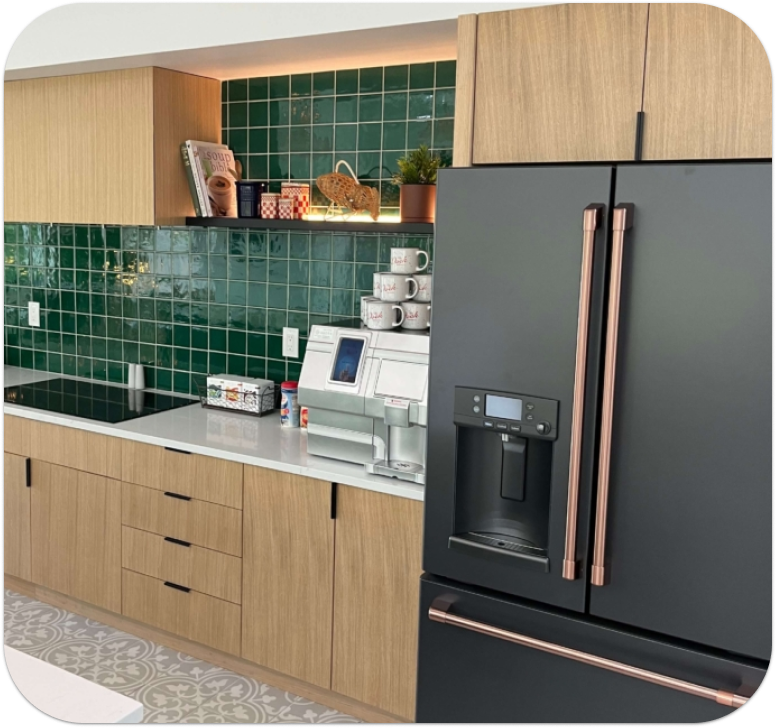
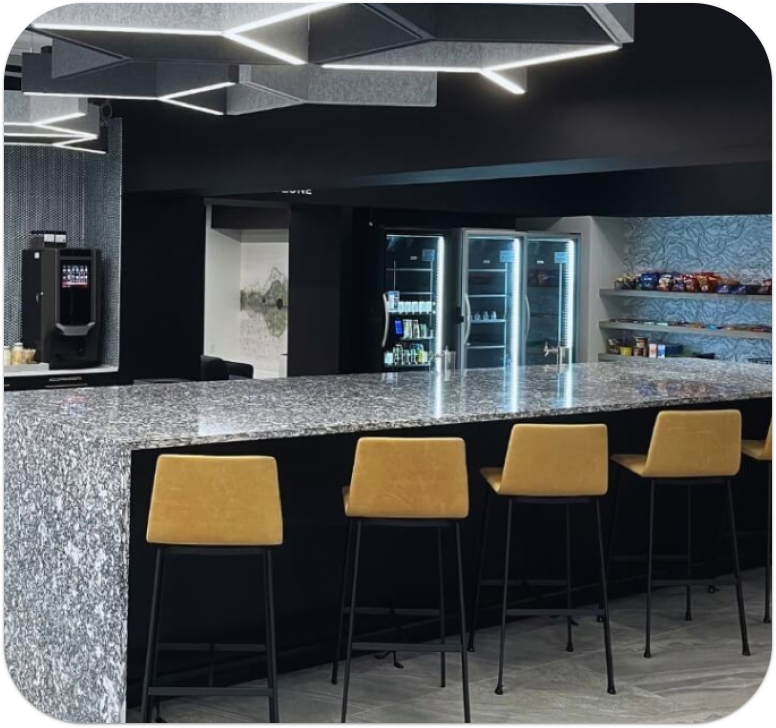
Breakroom Inspiration